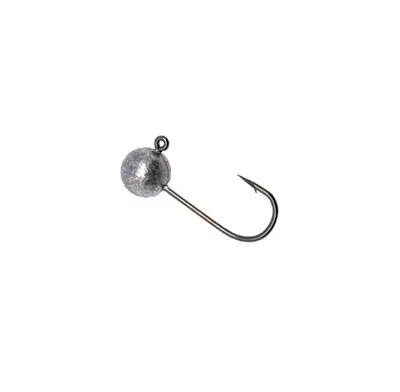
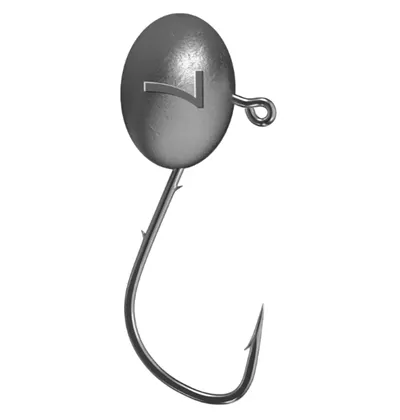
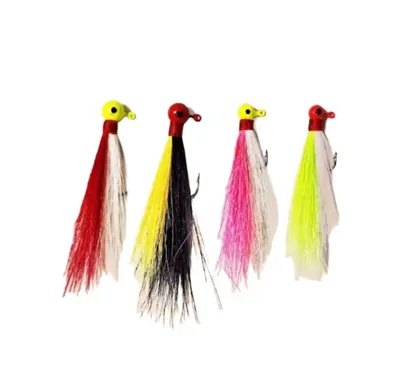
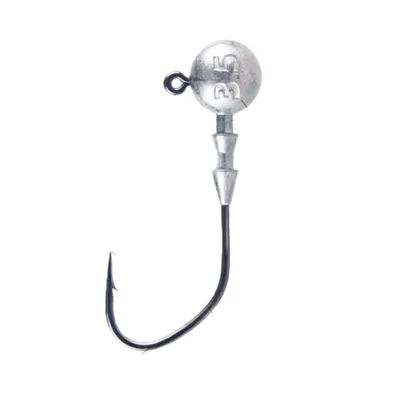
As a very important gadget in our fishing process, the hook can directly affect our probability of catching fish. If the hook we use is not suitable, either it will be difficult for the fish to swallow the bait, or it will not hook the fish firmly. The final result is either unhooking and running away from the fish, or it will be impossible to catch the fish smoothly.
Fishhooks can be divided into barb hook and barb free hook. When we fish in outdoor natural waters, which hook is better? Now let me tell you my practical experience so that you can choose the right hook for the current environment when you fish next time.
1. Barb free fishhook
As the name suggests, barb free fishhook means that there is no barb on the fishhook. Because there is no resistance of barb, the instantaneous penetration of barb free fishhook is stronger. At the same time, it is faster when taking fish. It can take fish quickly by using sub line or block needle. Barb free fishhook is often used in competitive competitions.
When we go wild fishing in natural waters, we may all have encountered the situation that clothes, pants, towels and other objects are hung on the hook. If the hook has barbs at this time, it is often difficult to remove it. There is no such trouble with barb free hook. Therefore, many fishermen also start to use barb free hook for convenience.
Because the barb free hook has no barb, it can normally pull the bait hook when fishing with commercial bait, but it is a difficult thing to hang the live bait such as earthworms, red worms, bread worms, etc., and the insect bait will fall off the hook in the process of wriggling.
2. Barb hook
The fish hook with barbs at the tip of the hook is called barb fish hook, and it is the existence of barb structure that makes the barb fish hook can firmly fix the live bait on the hook, which is convenient for us to choose all kinds of bait for fishing.
Some older fishermen, because of their poor eyesight, often can't raise the rod in time. They often lift the rod when the fish are "hung" on the hook. If the hook has no barbs, the fish are easy to break free and escape, but the barb hook can keep these greedy fish.
At the same time, when we crouch over some large-scale target fish in natural waters, our rod lifting strength is already very large. The penetration of the hook will not be reduced because of the barb. On the contrary, the barb can make the hook more firmly "lock" after it stabs into the fish's mouth, so as to avoid unhooking and running away.
However, after hanging clothes, pants, towels and other objects on the barb hook, it is often difficult for us to take it out quickly, and the fishing time will also be affected. In addition, we can't take fish quickly, so we can't maintain a fast throwing frequency.
In the view of many people, the saying that a fishhook without barbs is easy to run away is indeed reasonable, especially when the fishing line is not straight, the fish is easy to escape from the hook after a little struggle. When we know the reason, we can naturally try to avoid this situation.
Compared with the traditional barb free fishhook, the barb free fishhook adopting the flat beating process today not only inherits the characteristics of the barb free fishhook, but also effectively makes up for the defect that the barb free fishhook is easy to run fish. A diamond structure is designed and made under the hook tip, which can play a role similar to the barb anti falling after the hook penetrates the fish.
At present, in the process of wild fishing, whether we choose the hook with barbs or without barbs, as long as we grasp the opportunity to lift the rod and the way to slip the fish, we can minimize or reduce the situation of decoupling and running the fish. As for which hook we choose, we can choose according to our own fishing habits.