Friends who play Lua fishing are no strangers to Lua bait. Luya baits are divided into soft baits and hard baits. Soft baits are different from hard baits. There are many appearance designs such as swimming layer setting, swimming posture and other function settings. The type of fishing group is basic, which can be simple or complex. Therefore, the scope of use of soft baits is wider than that of other kinds of Luya. There are more combinations in the counterweight and range of activities. Depending on the user's own preferences and observation and response to the environment, beginners can quickly enter the situation and enjoy the fun of Luya fishing, while experts emphasize the in-depth study of the gesture of swinging the bait and the change of the swimming posture of the soft bait on the simple fishing group. Therefore, whether beginners of Luya fishing or masters of the flexible fishing group, Soft bait fishing methods are all fishing methods that can be played and explored repeatedly.
Soft baits are mainly made of plastic, most of which are processed with rubber or silica gel. They use their soft characteristics to imitate underwater creatures that often appear at the bottom of the water. Therefore, under this classification, there are many lifelike Luya. Today, we will introduce the following four soft baits!
1、 Grub type soft bait
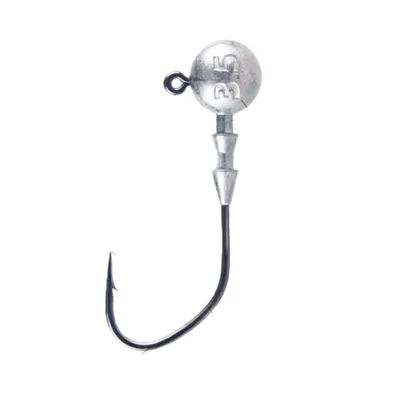
This is the most common basic type of all soft baits. Because of its simple shape and often accompanied by a rotating tail, it can disturb the water flow when swimming, which is suitable for all swimming layers. At the same time, because of its slow swimming speed, most carnivorous fish can't resist this temptation. It is suitable for light water or sea water, especially for bass, which is a must kill Luya. The soft bait itself has no weight, so it must be used with the swabbing hook. In practice, it is better to cast and operate the rod.
2、 Double tailed maggot soft bait
The double tailed maggot type soft bait, in addition to the doubling of the attraction factor of one more tail, mainly appeals to the fact that the double tailed soft bait is more like playing a shrimp with pliers, which can produce a strong attraction in the water, especially for some fish whose main food is shrimp, it can play the magic of attraction. In operation, we should pay attention to flexibility, usually minimal jumping, so the lead hanging should not be too heavy.
3、 Insect type soft bait
The general concept is the same as that of maggot type Luya. It is a longer soft bait. Here, it is more emphasized that the soft bait swims to the lower layer, that is, the insects that often swim at the bottom of the water. The length is divided into many kinds. Of course, the insect type Luya that is too long is not easy to operate. Generally speaking, the applicable specification will not exceed 5 inches. Of course, if you are careful that the deeper layer has a higher flow rate, it can also be applied to heavier lead.
4、 Biological soft bait
In addition to the above basic types, with the technological progress of modern mold technology, in order to improve the probability of bait on the target fish, in addition to the requirements of swimming type, there are also deeper requirements for appearance, such as lizard type, fish type, frog type, turtle shrimp type, and so on. In order to apply these soft baits, we must have a comprehensive observation and understanding of the surrounding environment, so that the applicable soft baits can better integrate into the environment and play a natural effect.