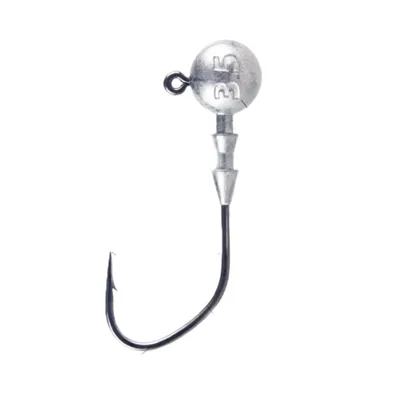
Just like the strength of a cement column depends on its diameter and the quality of the reinforced concrete used, not what color the column is painted with. At present, the common colors of fish hooks on the market are mainly white, black, gold, red, blue, and black, as well as pink, dark green, purple, tea, copper, bronze and other colors.
Except for black and brown, which are not electroplated, other colors are processed after the hooks are electroplated with white nickel. That is to say, the white hook is the basic hook: the black hook is plated with a layer of black nickel on the white hook, which is vividly called white and black by the Japanese. Yellow is copper plating, while gold hook is adding gold element to copper plating. The characteristics of the golden hook are anti-oxidation. When trolling, because of the good reflectivity of the golden hook, it can also play the role of attracting fish. Since the electroplating cost of the gold hook is the highest, the price is even more expensive than the black hook. The hooks of other colors such as green, red, and blue are painted with different colors of paint on the yellow and white hooks. They are mainly for appearance and have nothing to do with quality.
Since the cost of white hooks is the lowest, there are 3 to 4 more white hooks in a pack of the same type and the same price than the upper black ones. From an economic point of view, it is the most cost-effective to buy white hooks.
Cheap is not good, good is not cheap. Most consumers who don't know much about the situation will think this way intuitively, but it's not. There are many fish hook manufacturers in Japan. Their raw material prices and production processes are basically the same, so the costs are roughly the same. It's just that the cost of the hook type with large output is relatively lower. However, the price difference of a medium and small hook is only RMB 0.01, which means that due to the technical operation of each factory, the quality of the hook will be different, but the ex-factory price is almost the same.
The largest hook factories in Japan include Gamma Kaz (Puck Hook), Hayabusa, Toifu, Ona, Senyuan (Qianqiu Hook), etc. Their production and sales account for a large part of the Japanese fishing market. Half of them are sold all over the world, but the retail price of their fishing is only RMB 3.50 per pack (10~11 pieces are loaded with black Iseni 1~9# Izu, the large size decreases), 12~13 pieces The retail price of the black hook on the medium and small size is only 4.50 yuan. The Northeast market has the lowest price, no matter what the imported hooks are, they are all 3 packs of 10 yuan (10 pieces per pack are black).
Why are there 10 black hooks on the market that sell for more than 4 yuan! I also bought 18 yuan a bag of hooks in Guangdong and Shanxi, there are two reasons: 1. Since the price of Chinese labor is only two yuan in Japan One-tenth of the cost, and the sub-packaging of fish hooks cannot be automated and must be done manually. The above manufacturers have several kinds of packaging: (1) They are sold in China, and the price level and the cost of fish hooks in the reference are lower; (2) ) are exported to all parts of the world; (3) are sold back to Japan. Due to the high price level in Japan, a package of hooks is priced at 300 yen in the Japanese market, which is about 20 yuan. Taiwan, Hong Kong and other places flow back to China, so the price is higher. In fact, the quality of the hook you buy is no different from that of a pack of 3.50 yuan.
I don’t know if you have encountered such a thing before. When a group of fishermen were chopping mountains together, someone said that my hook was a Japanese hook. How good is my hook? I don’t despise Japanese products. It is true that they have their own hooks. The uniqueness of it, in fact, do you know the inside story?
With the increasingly frequent personnel exchanges between China and Japan, some returnees bought a pack of 10,000 loose hooks from Japan and sold them in China. As time passed, the counterfeit goods came quickly, so the so-called Japanese addresses and telephone numbers were printed on the packaging to prove that they were genuine imported goods. Because they do not purchase directly from the factory, they have been made a fortune by the resellers, so the cost remains high, which is the main reason for the high price of some hooks.
If the products of real Japanese companies are to be sold in China, the address of the packaging factory must be printed on the packaging according to relevant regulations; and they are all called companies according to the custom of China, and none of them are called corporations. In addition, the packaging only plays the role of wrapping the hook and the brand carrier. The packaging of the above famous companies is a transparent plastic bag plus a paper card, printed with a hook shape, and there is no self-proclaimed top-quality, super-class and other words. Their packaging fee accounts for about 10% of the entire cost, so the price is lower. And some counterfeiters who buy loose hooks and package them separately, wrap the fish hooks layer by layer, and then print the so-called trademarks that you don't understand at all, and make up a factory address. The highest prices for these hook packages are 30% of the total cost. "The wool comes from the sheep", and the increase in cost can only be borne by consumers by raising the selling price. And some retailers specialize in the time difference. When a new brand of hooks comes out, as long as there is no other local fishing gear store selling them, they will sell them at high prices until other homes have them, and then lower the price. That's one of the reasons why some brands of hooks you haven't seen before are overpriced.